

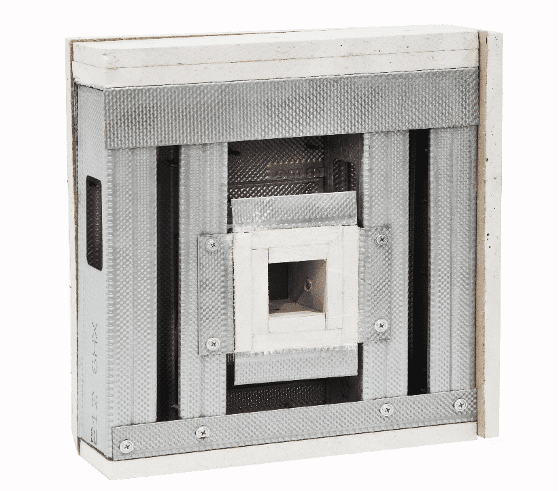
Why Drywall Remains a Leading Choice for Commercial and Industrial Buildings
Drywall is one of the most widely used interior construction systems for commercial buildings, providing architects and contractors with a flexible way to create internal walls, partitions, linings and ceilings.
Its value, however, extends beyond the plasterboard itself.
The correct drywall system can help project teams meet requirements for fire performance, acoustics, moisture resistance, durability, aesthetics and programme delivery, depending on the specified system and application.
When drywall components are also manufactured offsite, suitable fabrication can be removed from the construction site entirely – helping contractors reduce cutting, waste and site labour while improving installation efficiency.
For architects, designers, main contractors, drywall subcontractors and procurement teams, modern drywall therefore provides both a design solution and a construction productivity opportunity.
What Is Commercial Drywall?
Commercial drywall is a system of plasterboard, framing and associated components used to construct internal partitions, wall linings, ceilings and specialist features within commercial buildings.
Different plasterboard and drywall systems can be specified according to the required performance of each area.
These can include requirements for:
- Fire resistance.
- Acoustic performance.
- Moisture resistance.
- Impact resistance.
- Thermal performance.
- Structural requirements.
- Surface finish.
- Specialist environments.
The important distinction is that drywall performance comes from the complete specified system, not simply the plasterboard sheet.
Why Is Drywall Used in Commercial Construction?
Drywall combines installation speed with substantial design flexibility.
Compared with traditional wet construction methods, drywall systems can allow internal spaces to be formed without lengthy wet-trade processes.
That makes them particularly suited to projects where programme, flexibility and repeatability matter.
The original article identifies cost efficiency, installation speed, insulation, aesthetic flexibility and specialist board properties as key reasons drywall is widely used on larger projects.
But for today’s commercial project team, the benefits are broader.
1. Faster Construction Programmes
Programme certainty is critical on major construction projects.
Drywall systems allow internal walls and partitions to be assembled relatively quickly without many of the drying periods associated with traditional wet construction.
Offsite manufacturing can take this a stage further.
Instead of measuring and cutting every suitable component at the point of installation, project-specific components can be manufactured before they reach site.
This allows contractors to reduce fabrication activity and concentrate skilled labour on installation.
2. Greater Design Flexibility
Commercial buildings rarely have identical requirements throughout.
An office development might need:
- Acoustic meeting rooms.
- Standard office partitions.
- Moisture-resistant areas.
- Feature ceilings.
- Service openings.
- Fire-resisting constructions where specified.
Drywall allows different systems to be selected according to these requirements while retaining a common construction methodology.
It also provides architects and interior designers with substantial flexibility when creating complex interior layouts.
3. Fire Performance
Fire performance is an important consideration in commercial drywall specification.
Specialist plasterboards and tested drywall systems can be used where defined levels of fire resistance are required.
However, it is important not to treat plasterboard as inherently “fireproof”.
The required performance depends on the complete tested system, potentially including the board type, number of layers, framing, fixings, joints, insulation and interfaces.
Drywall Pro-Cut manufactures components to support specified drywall constructions, but the finished installation must follow the relevant system specification and manufacturer requirements.
4. Acoustic Performance
Acoustic performance is particularly important in buildings such as:
- Hotels.
- Healthcare facilities.
- Offices.
- Schools.
- Universities.
- Student accommodation.
- Residential developments.
Different drywall constructions can be specified to achieve different acoustic requirements.
Again, performance depends upon the complete wall or ceiling construction rather than the plasterboard alone.
For architects and contractors, this makes correct system selection and accurate installation particularly important.
5. Moisture and Specialist Performance
Not every area of a building requires the same plasterboard.
Specialist boards and systems are available for applications requiring additional moisture, impact or other performance characteristics.
This allows drywall specifications to change according to room and environmental requirements while remaining integrated into the wider drylining package.
6. Architectural and Aesthetic Flexibility
Drywall isn’t limited to straight internal walls.
It can be used to create:
- Curved walls.
- Feature ceilings.
- Bulkheads.
- Blind boxes.
- Column encasements.
- Beam encasements.
- Window openings.
- Bespoke architectural details.
This makes drywall particularly useful for commercial interiors where architects and designers need to combine functional requirements with visual design.
7. Construction Cost Efficiency
Drywall can provide commercial advantages because of its relatively efficient installation process.
However, the real cost shouldn’t be measured purely by the price of plasterboard.
Contractors should consider total installed cost:
Material + fabrication + labour + waste + handling + rework + logistics + programme impact
This becomes particularly important when comparing traditional site fabrication with offsite drywall manufacturing.
The cheapest board doesn’t necessarily produce the lowest installed drywall cost.
8. Reduced Site Waste Through Offsite Manufacturing
Traditional drywall installation can generate plasterboard offcuts as components are measured and cut on site.
Drywall Pro-Cut takes suitable fabrication processes away from the construction site.
Project-specific components can be manufactured in a dedicated production environment before being delivered for installation.
This can help reduce:
- Site cutting.
- Plasterboard offcuts on site.
- Waste handling.
- Cutting dust.
- Site congestion.
- Time spent fabricating repetitive components.
It can also help contractors support wider project sustainability and waste-reduction objectives.
Commercial Drywall vs Traditional Plaster
For many commercial projects, the decision between drywall and traditional plaster construction comes down to programme, performance and project requirements.
| Consideration | Drywall | Traditional Plaster |
|---|---|---|
| Installation | Relatively fast | More wet-trade dependent |
| Drying | Limited compared with wet plaster | Drying periods required |
| Internal layout flexibility | High | More difficult to alter |
| Specialist systems | Wide range available | Application dependent |
| Acoustic solutions | System dependent | Construction dependent |
| Fire performance | Tested systems available | Construction dependent |
| Offsite manufacturing | Strong potential | Limited |
| Repeatability | Well suited | Less suited |
| Services/access | Relatively adaptable | Can be more disruptive |
Neither construction method is universally “better”. The correct choice depends on the design, performance requirements, building type and specification.
Which Commercial Projects Use Drywall?
1. Hotels and Hospitality
Drywall is particularly suited to hotels because of repetitive bedroom layouts, corridors and acoustic requirements.
2. Commercial Offices and Fit-Out
Partitions allow internal layouts to be configured around offices, meeting rooms, breakout areas and changing workplace requirements.
3. Healthcare
Healthcare developments can require multiple specialist wall constructions, detailed coordination and consistent installation quality.
4. Education
Schools and universities frequently require a combination of acoustic, durability and fire-performance specifications.
5. Student Accommodation
High levels of room repetition create opportunities for standardisation and offsite production.
6. High-Rise Residential
Repeated apartment and corridor layouts can make drywall suitable for systematic installation across multiple floors.
7. Industrial Buildings
Drywall systems can also be used for appropriate internal partitions, offices, welfare areas and other internal spaces within industrial developments, subject to the required specification.
How Does Offsite Manufacturing Improve Commercial Drywall Installation?
This is where Drywall Pro-Cut’s proposition becomes particularly relevant.
Rather than simply supplying raw plasterboard, Drywall Pro-Cut manufactures project-specific components before they reach the construction site.
Depending on the project, this can include:
- Boards cut to size.
- Deflection heads.
- Builders work openings.
- Door sets.
- Plywood pattresses.
- Bulkheads.
- Beam encasements.
- Column encasements.
- Bathroom pod linings.
- Bespoke drywall components.
The objective is to move suitable repetitive fabrication into a controlled manufacturing environment and allow site teams to focus more of their time on installation.
British Gypsum, Siniat and Knauf Drywall Systems
Commercial projects are often designed around established manufacturer systems.
Drywall Pro-Cut manufactures components to support specifications based on leading drywall manufacturers including British Gypsum, Siniat and Knauf.
The manufacturer and product should always be matched to the project’s specified system and performance requirements.
This is particularly important where the partition or lining has defined fire, acoustic or other performance criteria.
What Should Architects and Contractors Consider When Specifying Drywall?
Selecting the right solution should begin with the required building performance rather than simply choosing a plasterboard product.
Consider:
- Fire requirements – Does the complete construction require a particular fire-resistance performance?
- Acoustic requirements – What level of sound insulation is required between spaces?
- Moisture exposure – Does the environment require a specialist board or system?
- Impact and durability – Will the wall experience higher levels of traffic or physical impact?
- Services – What openings, pattresses or coordination details will be required?
- Programme – Can repetitive components be manufactured before installation?
- Volume – Are there sufficient repeated details to benefit from offsite production?
- Manufacturer specification – Is the project based on British Gypsum, Siniat, Knauf or another system?
Answering these questions early gives the project team greater opportunity to optimise the drywall package before construction begins.
Why Choose Drywall Pro-Cut for Commercial Drywall?
Drywall Pro-Cut specialises in taking suitable drywall fabrication away from busy construction sites and manufacturing components before installation.
For large and repetitive commercial projects, that can help contractors achieve:
- Reduced site fabrication.
- Better use of skilled labour.
- Greater manufacturing consistency.
- Reduced site-generated waste.
- Improved installation efficiency.
- Greater programme predictability.
Our role is not simply to sell plasterboard.
It is to help project teams determine which drywall components can be manufactured more efficiently before they reach site.
Build a More Efficient Commercial Drywall Package
Drywall remains one of the most flexible construction systems available for commercial interiors.
But modern drywall construction is about more than selecting plasterboard.
Correct system specification, coordinated design, specialist components and efficient manufacturing all influence the final cost, quality and programme.
By identifying suitable drywall components for offsite manufacture before installation begins, contractors can reduce unnecessary site fabrication and create a more predictable approach to delivering large drywall packages.
FAQs
1. Can Drywall Pro-Cut supply commercial drywall components for large construction projects?
Yes. Drywall Pro-Cut manufactures project-specific drywall components for commercial construction, including deflection heads, builders work openings, door sets, cut-to-size boards, pattresses and bespoke components. Send your project drawings and specification for a tailored quotation.
2. Can you manufacture drywall components from architectural or construction drawings?
Yes. Project drawings, drywall layouts, component dimensions and specifications can be used to determine which elements are suitable for offsite manufacture. Contact Drywall Pro-Cut during design development, estimating or procurement for the greatest opportunity to optimise the package.
3. Can Drywall Pro-Cut manufacture components for British Gypsum, Siniat and Knauf specifications?
Drywall Pro-Cut manufactures components to support specifications based on major drywall manufacturers including British Gypsum, Siniat and Knauf. Products and constructions should always be confirmed against the project’s specified system before manufacture.
4. How much do bespoke commercial drywall components cost?
Pricing depends on the material, component type, quantity, dimensions, complexity and project requirements. For commercial projects, compare total installed cost – including fabrication labour, waste and programme impact – rather than raw material price alone. Drywall Pro-Cut can provide a project-specific quotation.
5. How do I get a quote for a commercial drywall project?
Send Drywall Pro-Cut your drawings, drywall specification, approximate quantities, project location and programme requirements. The team can assess suitable offsite components and provide a tailored quotation.
Call 01827 213201 OR email enquiries@drywallpro-cut.co.uk.
Planning a commercial construction or fit-out project?
Send Drywall Pro-Cut your drawings and specifications to identify where offsite manufacturing could improve your drywall package. enquiries@drywallpro-cut.co.uk OR
Call 01827 213201.